Identity fraud has become one of the most persistent threats facing digital businesses. As platforms scale faster and user onboarding becomes increasingly remote, attackers exploit gaps in identity systems that were never designed for today’s threat landscape. In 2026, organizations trying to Reduce Identity Fraud are realizing that passwords, document uploads, and centralized databases no longer provide meaningful protection. Blockchain is emerging as a practical way to close these gaps by changing how identity is verified, stored, and trusted.
The Growing Business Impact of Identity Fraud
Identity fraud is no longer limited to isolated account takeovers. It now affects entire business ecosystems.
Financial losses continue to rise as fake accounts, synthetic identities, and credential abuse drain revenue through chargebacks, fraudulent transactions, and manual investigations. At the same time, regulatory pressure has increased. Compliance failures tied to weak identity verification can result in fines, audits, and operational restrictions.
Beyond direct costs, trust erosion is often the most damaging outcome. Customers who experience fraud or identity misuse rarely return, and reputational damage spreads quickly in competitive markets. Internally, fraud teams and support staff are forced into reactive workflows that slow growth and increase overhead.
These pressures make it clear that identity fraud is no longer just a security issue. It is a business risk.
Why Traditional Identity Verification Models Keep Breaking
Centralized Identity Storage Creates Risk
Most identity systems rely on centralized databases that store sensitive personal information. While convenient, these systems create a single point of failure. Once breached, attackers gain access to massive volumes of reusable data that can be exploited across multiple platforms.
Even well protected databases remain attractive targets because the payoff is high. Encryption and access controls help, but they do not eliminate the underlying structural weakness.
Static Identity Checks Are No Longer Effective
Traditional identity verification often happens once during onboarding. After that, access is maintained using passwords, tokens, or basic multi-factor authentication. These methods are easy to bypass through phishing, credential stuffing, or social engineering.
Document based verification is also fragile. Forged IDs, manipulated images, and stolen documents circulate widely, making it difficult to distinguish legitimate users from attackers using automated tools.
These weaknesses explain why many organizations struggle to keep pace with modern fraud tactics.
How Blockchain Works as an Identity Security Foundation
Blockchain changes identity security by shifting trust away from centralized systems.
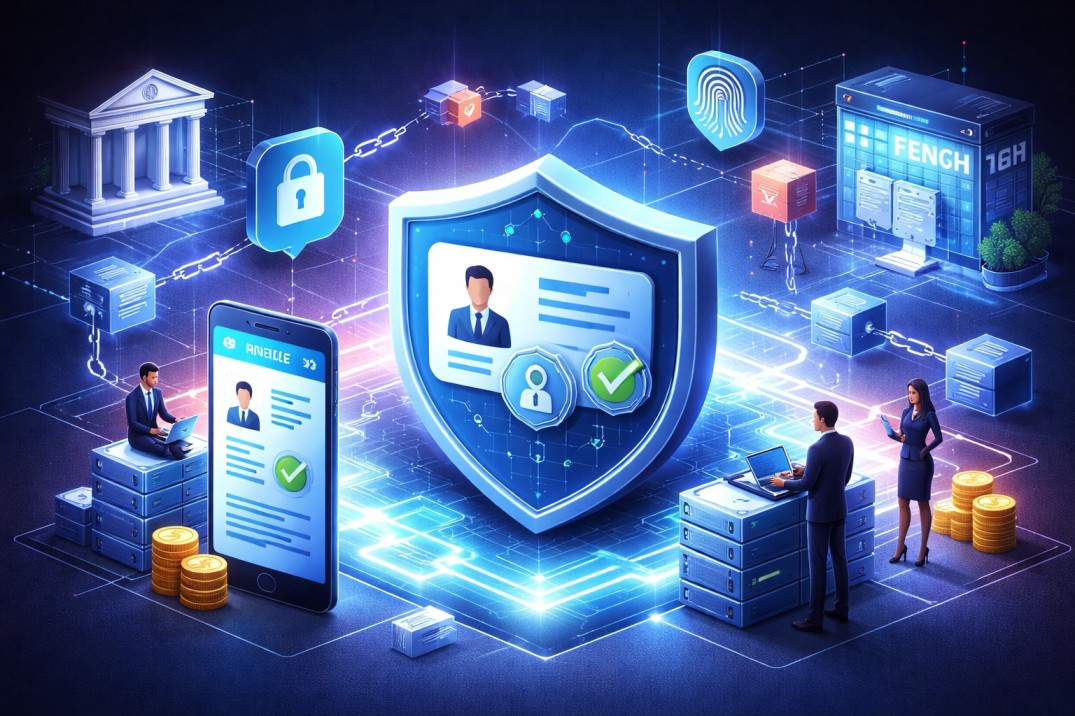
Instead of storing identity data in one location, blockchain enables decentralized identity models where users control their own credentials. Verification happens through cryptographic proofs rather than direct access to raw data.
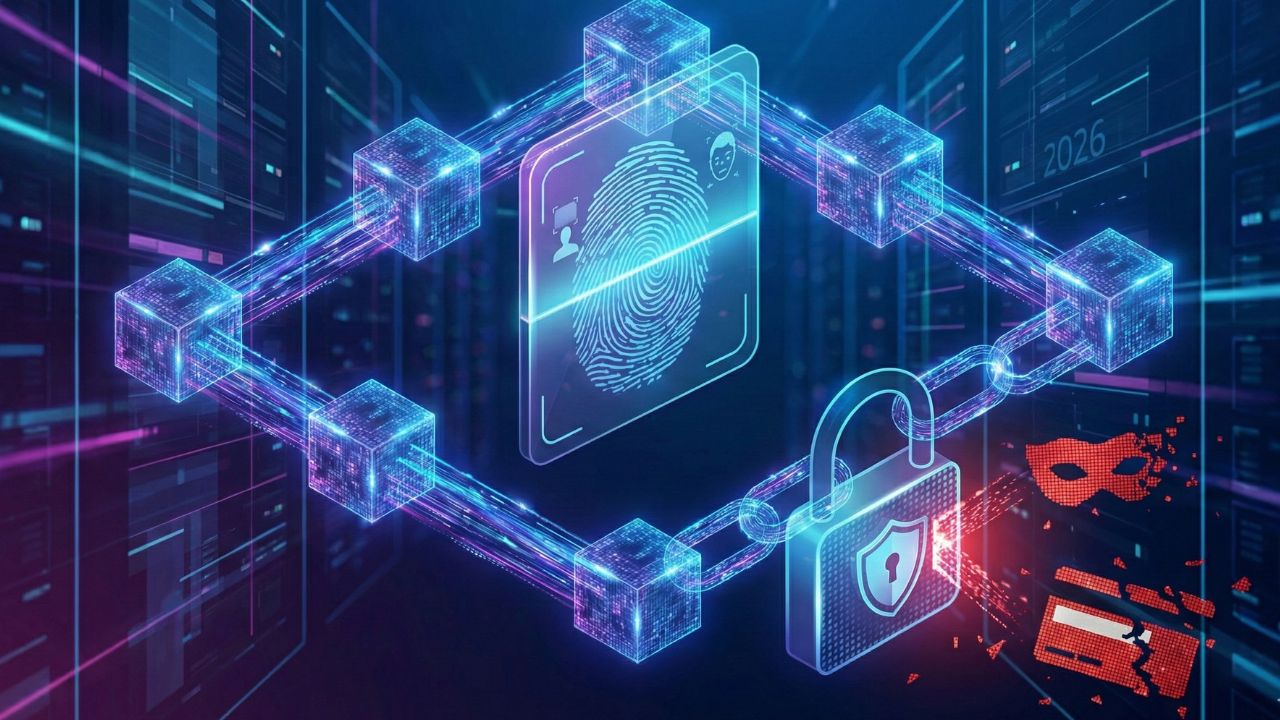
Every verification event can be recorded in an immutable ledger, creating transparency without exposing sensitive information. This structure allows systems to confirm authenticity without needing to store or repeatedly process personal data.
The result is a model based on proof rather than assumption.
How Blockchain Helps Reduce Identity Fraud in 2026
Decentralized Identity and User Controlled Credentials
With decentralized identity, individuals hold their credentials in secure digital wallets. Organizations request verification only when needed, and users decide what to share.
There is no central repository of identity data for attackers to exploit. Even if one service is compromised, credentials cannot be reused elsewhere.
Verifiable Credentials Instead of Raw Identity Data
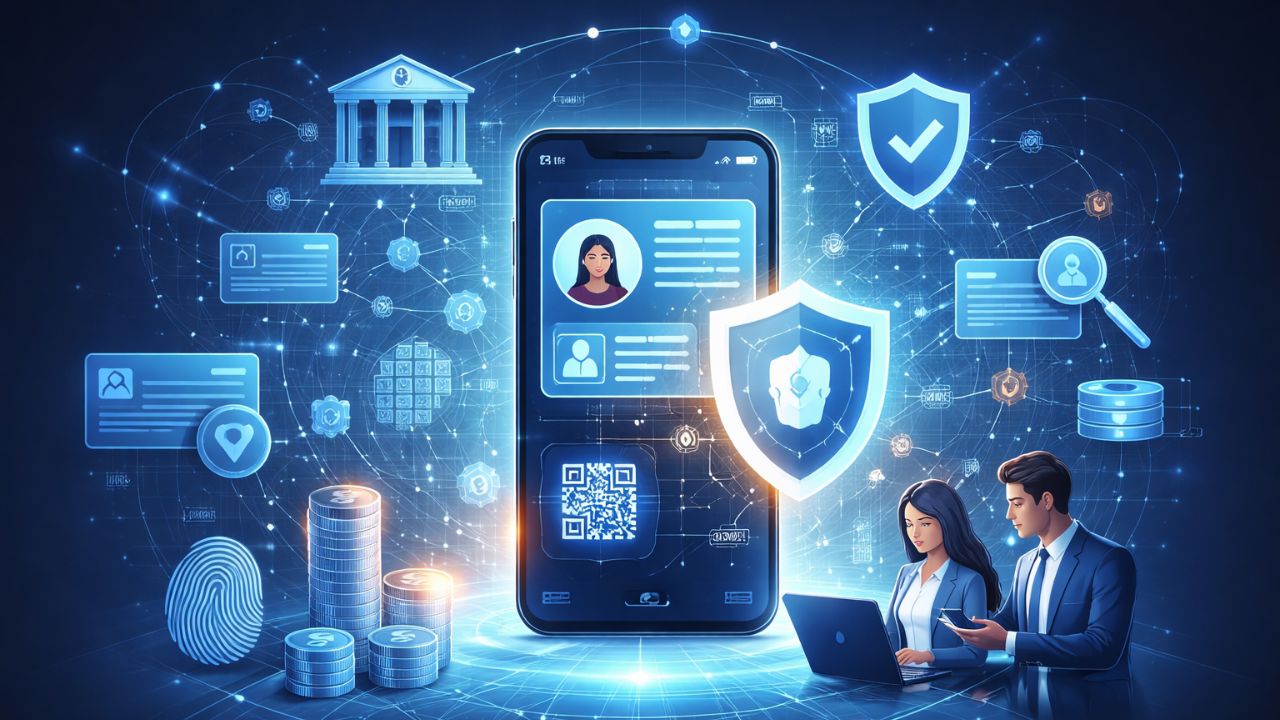
Blockchain enables verifiable credentials that prove specific facts without revealing full documents. A system can confirm that a user is over a certain age, holds a valid license, or passed a compliance check without storing the underlying data.
This approach significantly reduces exposure while maintaining high assurance levels.
Immutable Verification That Limits Fraud
Each credential issuance and verification can be logged immutably. This prevents duplicate identities, limits synthetic identity creation, and creates a reliable audit trail.
In 2026, organizations using these models are better positioned to Reduce Identity Fraud without increasing friction for legitimate users.
Real World Use Cases Where Blockchain Identity Is Effective
Blockchain based identity systems are already being adopted across multiple industries.
In fintech, decentralized identity improves onboarding while reducing fake account creation. In enterprise environments, it strengthens employee and partner access control without relying on shared credentials.
Healthcare organizations use blockchain identity to protect patient records while maintaining interoperability. Supply chains rely on verified identities to control access across vendors and logistics partners. Web3 platforms use identity verification to prevent fraud while preserving user privacy.
These use cases demonstrate that blockchain identity is not experimental. It is operational.
Compliance, Regulation, and Trust in 2026
Regulators increasingly expect organizations to demonstrate strong identity controls and data protection practices. Blockchain identity supports these requirements by design.
Verifiable credentials simplify KYC and AML processes while reducing data retention risks. Immutable logs provide clear evidence during audits. Privacy preserving verification helps align with data protection regulations that limit unnecessary data collection.
For organizations operating across jurisdictions, these benefits translate into lower compliance friction and stronger regulator confidence.
What Businesses Should Evaluate Before Adopting Blockchain Identity
Before implementation, organizations should assess a few key factors:
- Integration with existing authentication and onboarding systems
- Scalability and transaction efficiency for high user volumes
- Regional regulatory requirements and data handling rules
- Governance models for credential issuance and revocation
Thoughtful planning ensures that blockchain identity delivers long-term value rather than short-term complexity.
Common Mistakes Companies Make When Trying to Reduce Identity Fraud
Some organizations treat blockchain as a drop-in replacement for existing systems. This often leads to overcomplicated architectures that users struggle to adopt.
Others overlook user experience, introducing friction that pushes customers away. Compliance planning is also frequently delayed, creating legal exposure later.
Choosing platforms without enterprise support or security expertise can result in fragile implementations that fail under real-world conditions.
Avoiding these mistakes requires both technical and operational experience.
How Exobloc Supports Secure Blockchain Identity Implementation
Implementing blockchain identity at scale requires more than smart contracts. It requires architecture that aligns with business workflows, security policies, and regulatory obligations.
Exobloc helps organizations design and deploy blockchain identity systems that are practical, secure, and enterprise ready. This includes decentralized identity architecture, secure smart contract development, and compliance aligned deployment.
Businesses exploring blockchain identity solutions can learn more through Exobloc’s Blockchain Identity Verification Services, which focus on real-world fraud prevention rather than theoretical models.
Conclusion
Traditional identity systems were built for a different era. As fraud techniques evolve, relying on centralized databases and static verification methods is no longer enough.
Blockchain introduces a trust model based on verification, transparency, and user control. For organizations looking to Reduce Identity Fraud in 2026, this approach offers a path forward that balances security, privacy, and usability.
The shift is already underway. The question for businesses is not whether identity systems need to change, but how quickly they are prepared to adapt.
FAQs
Blockchain helps reduce identity fraud by decentralizing identity control, using cryptographic proofs, and eliminating single points of failure in traditional centralized systems. This makes it harder for attackers to steal or reuse personal data.
Yes. Blockchain identity systems issue verifiable credentials tied to cryptographic proofs, making it significantly more difficult for attackers to create fake or synthetic identities that pass verification checks.
No. Most blockchain identity solutions store only encrypted hashes or proofs on the blockchain while keeping sensitive personal data secure off-chain, minimizing exposure to fraud and data leaks.
Decentralized identity gives users control over what personal information they share, and only the necessary data is disclosed for verification. This reduces excessive data exposure and the risk of centralized database breaches.
Verifiable credentials allow systems to confirm specific identity attributes without revealing the actual data. This reduces data leakage and makes it harder for fraudsters to spoof identity claims.
Yes. Blockchain systems create clear, immutable audit trails and support compliance processes like KYC and AML, which helps organizations reduce identity fraud while meeting regulatory requirements.