Supply chains rarely fail in one obvious place. Most of the time, issues build quietly across multiple stages. A delayed shipment here, a data mismatch there, a supplier you cannot fully verify. Over time, these small gaps turn into lost revenue, unhappy customers, and constant firefighting.
Recent global disruptions exposed how fragile traditional systems really are. Businesses that relied on disconnected tools and manual coordination struggled the most. The need now is not just better management but better infrastructure.
Blockchain is being adopted for that reason. Not as an experiment, but as a working solution to fix long-standing problems in supply chain operations. This article focuses on those real problems and how blockchain addresses them in a practical way.
Supply Chain Problems vs Blockchain Solutions
| Supply Chain Problem | Blockchain Solution | Business Impact |
| Lack of Transparency | Shared, real-time ledger accessible to all stakeholders | End-to-end visibility and improved trust |
| Data Inaccuracy & Human Errors | Single source of truth with automated validation | Fewer errors and better decision-making |
| Fraud & Counterfeiting | Tamper-proof records with verifiable product history | Reduced fraud risk and stronger brand protection |
| Slow Processes & Documentation | Smart contracts automate approvals and transactions | Faster operations and reduced administrative costs |
| Poor Traceability & Compliance | Complete, immutable audit trail for every transaction | Easier compliance and faster issue resolution |
Why Traditional Supply Chains Are Failing Businesses
Most supply chains were not built for the level of complexity businesses deal with today. They evolved over time, with new tools added at different stages, often without full integration.
Common issues include:
- Multiple systems that do not communicate properly
- Heavy reliance on spreadsheets and manual updates
- Limited visibility beyond direct suppliers
- Delayed or inaccurate reporting
According to McKinsey & Company, supply chain disruptions can reduce annual earnings significantly over time. At the same time, IBM has highlighted that poor data sharing remains one of the biggest barriers to efficiency.
These are not isolated problems. They are structural.
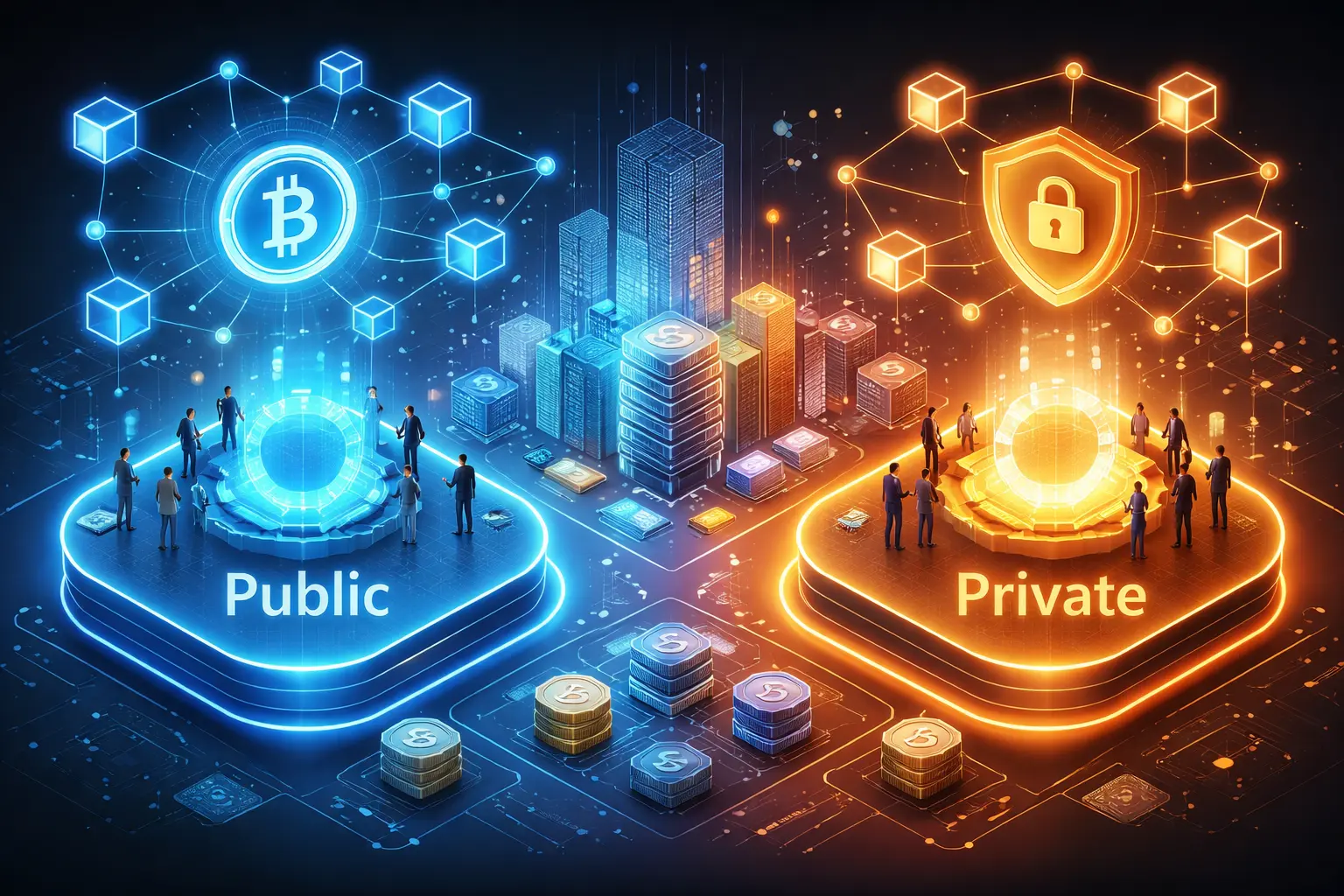
Read Also: Public vs Private Blockchain: Which One Should Businesses Choose
Problem #1: Lack of Transparency Across the Supply Chain
What’s happening
Many businesses can only see what happens within their immediate network. Once a product moves beyond a direct supplier, visibility drops sharply. This creates blind spots across sourcing, production, and logistics.
Business impact
- Delays are harder to identify early
- Disputes between stakeholders increase
- Compliance risks grow due to missing information
How blockchain solves it
Blockchain creates a shared ledger where every transaction is recorded and visible to authorized participants. Each update is time-stamped and cannot be altered later.
This allows businesses to track products from origin to delivery without relying on separate systems.
Example
Walmart implemented blockchain for food traceability and reduced tracking time from days to seconds. This level of visibility changes how quickly businesses can respond to issues.
Problem #2: Data Inaccuracy and Human Errors
What’s happening
Supply chains involve constant data exchange. Orders, invoices, shipment details, inventory levels. When this data is entered manually across multiple systems, errors are unavoidable.
Even small mistakes can create larger issues downstream.
Business impact
- Inventory discrepancies
- Incorrect demand forecasting
- Delays caused by rechecking and corrections
How blockchain solves it
Blockchain acts as a single source of truth. Once data is recorded, all participants access the same version.
Smart contracts can also validate transactions automatically. This reduces the need for manual verification and lowers the chance of human error.
Supporting insight
Deloitte has reported that inconsistent data across systems is a major contributor to operational inefficiencies in supply chains.
Problem #3: Fraud, Counterfeiting, and Lack of Trust
What’s happening
In industries dealing with high-value goods, counterfeit products are a serious concern. Without proper verification systems, it becomes difficult to confirm product authenticity.
Trust between partners often depends on documentation that can be manipulated.
Business impact
- Financial losses due to fake products
- Damage to brand reputation
- Legal and compliance risks
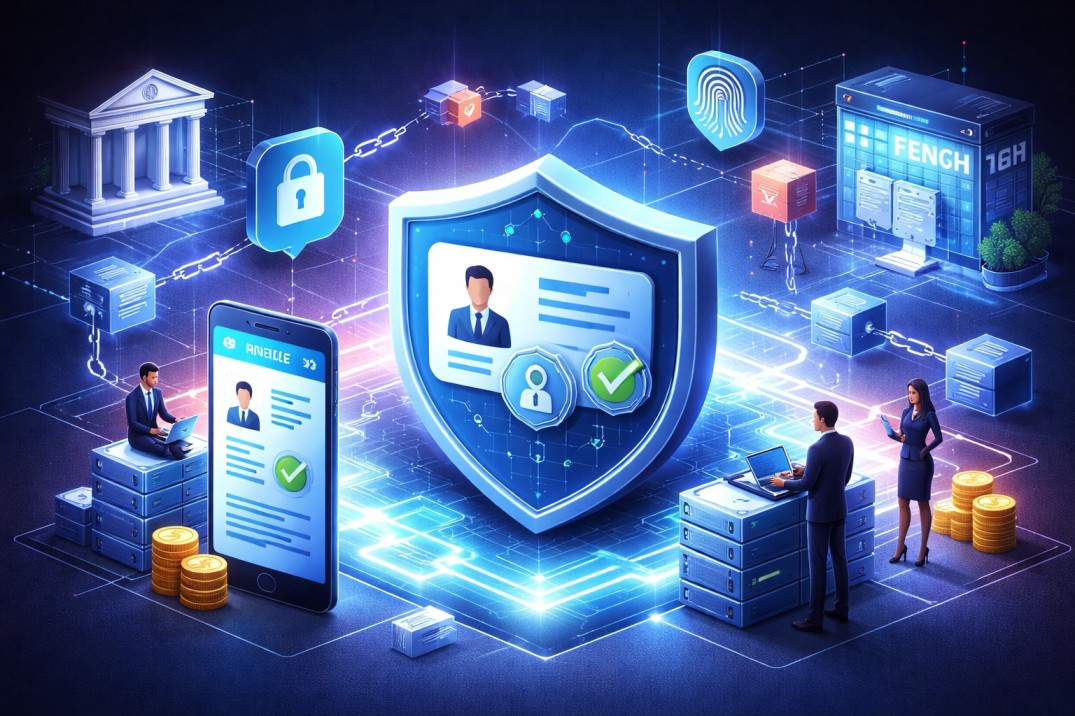
How blockchain solves it
Blockchain records every transaction in a tamper-proof way. Each product can have a unique digital identity that tracks its journey.
This makes it easier to verify authenticity at any point in the supply chain.
Example
De Beers uses blockchain to track diamonds from source to market, ensuring they are authentic and ethically sourced.
Problem #4: Slow Processes and Inefficient Documentation
What’s happening
Many supply chains still depend on paper-based processes or semi-digital workflows. Approvals, contracts, and payments often require manual intervention.
This slows down operations, especially in global trade.
Business impact
- Delayed shipments
- Higher administrative costs
- Longer payment cycles
How blockchain solves it
Smart contracts automate agreements between parties. Once predefined conditions are met, actions such as payments or approvals are executed automatically.
This reduces paperwork and speeds up the entire process.
Data point
The World Economic Forum has indicated that blockchain can significantly reduce the time required for trade documentation and processing.
Problem #5: Poor Traceability and Compliance Issues
What’s happening
Tracking a product back to its origin can be difficult, especially in complex supply chains with multiple intermediaries.
This becomes a major issue when dealing with regulations or product recalls.
Business impact
- Delayed recall processes
- Difficulty meeting regulatory requirements
- Increased compliance costs
How blockchain solves it
Blockchain provides a complete and verifiable audit trail. Every step of the product journey is recorded and easily accessible.
This simplifies compliance and allows faster response during audits or recalls.
Example
Nestlé has adopted blockchain to improve transparency and traceability across its supply chain operations.
Blockchain vs Traditional Supply Chain
| Factor | Traditional Supply Chain | Blockchain-Based Supply Chain |
| Data Visibility | Limited visibility across systems and partners | Shared, real-time visibility across all stakeholders |
| Data Accuracy | High risk of errors due to manual entries | Verified and consistent data across the network |
| Trust | Requires intermediaries and third-party verification | Built-in trust through decentralized validation |
| Process Speed | Slower due to manual approvals and paperwork | Faster with automated smart contracts |
| Traceability | Difficult to track products end-to-end | Complete traceability from origin to delivery |
| Security | Vulnerable to data tampering and breaches | Tamper-proof and highly secure records |
Key Business Benefits of Solving These Problems
When these challenges are addressed, the impact is measurable.
- Reduced operational costs due to fewer errors and delays
- Faster decision-making with real-time data access
- Stronger trust between partners and stakeholders
- Improved customer confidence through transparency
- Better compliance with industry regulations
These are not incremental improvements. They directly affect profitability and long-term growth.
Blockchain Supply Chain Benefits (ROI Overview)
| Benefit Area | Before Blockchain | After Blockchain Implementation |
| Operational Cost | Higher due to manual processes and inefficiencies | Reduced through automation and streamlined workflows |
| Process Efficiency | Slower workflows with delays in approvals | Faster operations with automated transactions |
| Error Rate | Frequent errors due to manual data handling | Significant reduction with validated, shared data |
| Partner Trust | Limited trust due to lack of transparency | Improved trust with shared and immutable records |
| Compliance & Audits | Time-consuming and complex audits | Faster, easier audits with complete traceability |
Who Should Consider Blockchain for Supply Chain
Blockchain is not limited to a specific industry. It becomes valuable when supply chains are complex or high-risk.
It is especially relevant for:
- Enterprises with multiple suppliers across regions
- Businesses handling sensitive or high-value goods
- Companies facing strict compliance requirements
- Organizations scaling operations globally
If visibility, trust, or efficiency are ongoing challenges, blockchain becomes a practical option.
Read Also: How Blockchain Smart Contract Development Services Help You Build Secure Applications
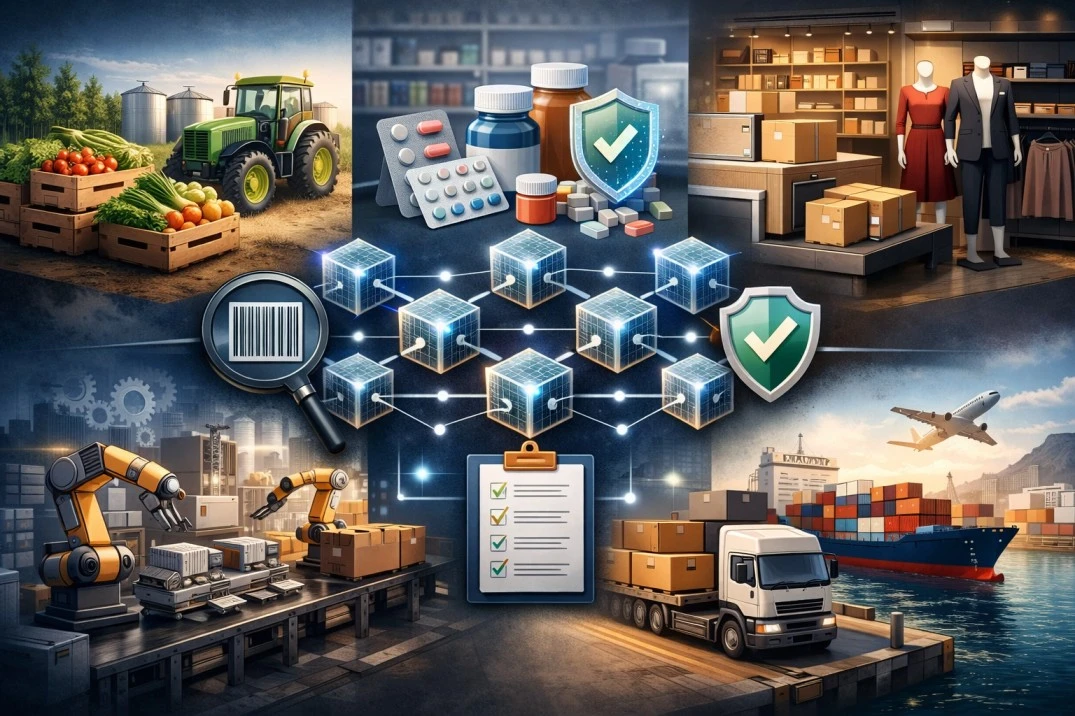
Blockchain Supply Chain Use Cases by Industry
| Industry | Key Challenge | Blockchain Use Case |
| Food & Agriculture | Difficulty in tracking product origin | End-to-end traceability for faster recalls and safety verification |
| Pharmaceuticals | Counterfeit drugs in supply chain | Product authentication and secure tracking |
| Retail | Lack of real-time inventory visibility | Transparent inventory tracking across locations |
| Manufacturing | Poor coordination between suppliers | Shared data systems for better collaboration |
| Logistics | Delays and shipment tracking issues | Real-time shipment tracking and automated documentation |
How to Get Started with Blockchain in Supply Chain
Adopting blockchain does not require a complete system overhaul from day one. A structured approach works better.
- Identify gaps in your current supply chain
- Focus on one high-impact use case first
- Choose a technology partner with domain experience
- Start with a pilot and expand gradually
This reduces risk while allowing measurable improvements early on.
Ready to Fix Your Supply Chain Challenges?
If your supply chain is facing delays, poor visibility, or trust issues between partners, continuing with the same systems will only increase complexity. Blockchain offers a way to simplify operations while improving control over every stage of the process.
Working with an experienced Blockchain Supply Chain Management Services helps you design and implement solutions tailored to your business model, ensuring faster adoption and measurable results without unnecessary disruption.
Conclusion
Supply chain problems are not new, but the expectations around speed, transparency, and accountability have changed. Businesses can no longer rely on disconnected systems and manual coordination to manage growing complexity.
Blockchain is already being used by global companies to solve these issues in a practical way. It improves visibility, reduces errors, and builds trust across the entire network.
For companies looking to strengthen their supply chain operations, this is not about adopting new technology for the sake of it. It is about fixing problems that directly impact performance and growth.
Position your brand here as a reliable partner that understands both technology and real business challenges, and can deliver solutions that work in real environments.
FAQs
Blockchain helps solve major issues like lack of transparency, data inaccuracies, fraud, slow processes, and poor traceability by creating a shared and secure system for all participants.
Blockchain records every transaction in a shared ledger, allowing all authorized stakeholders to track products in real time from origin to delivery.
Yes, blockchain uses tamper-proof records that make it extremely difficult to alter or fake data, helping prevent counterfeit products and fraud.
Blockchain is most useful for complex supply chains with multiple stakeholders, high-value goods, or strict compliance requirements.
It eliminates duplicate data entries by creating a single source of truth where all updates are verified and shared across the network.
Smart contracts are automated agreements stored on blockchain that execute actions like payments or approvals when predefined conditions are met.